



The Bottom Line When it Comes to Colorectal Cancer
March is National Colorectal Cancer Awareness Month. What we know is this: Early detection through routine screening saves lives.
Words by Daniel Hirsch
Given that colorectal cancer is the second leading cancer killer in the United States, it’s a common disease that more people should be aware of — especially because it’s highly preventable thanks to regular, routine screenings.
Roughly 153,000 Americans a year receive this cancer diagnosis. In 2025, the American Cancer Society anticipates colorectal cancer will cause 52,900 deaths in the U.S. That number could be lower if more people were aware of the lifesaving effect of screenings.
Catch it Early
Colorectal cancers generally develop from small polyps that form in the inner lining of the colon. Polyps often begin as benign growths, but can turn cancerous over time. Catching them before they become malignant, therefore, is key to stopping serious illness and death.
“By identifying signs of colon cancer through screenings, early intervention can be performed to minimize spread,” says DAP Health’s Co-Director of Adult Medicine Dr. Frederick Afari. “If we find a polyp, and that’s the only tissue sample that has cancer cells, you don’t have to go through a big surgery. We just remove it then and there [during the colonoscopy]. You don’t have to have your colon taken out. Chemotherapy and all of that stuff doesn’t have to happen.”
Not only does catching colon cancer early eliminate the need for more serious surgery and the painful symptoms caused by further growth, but it also greatly improves survival rates. If colorectal cancer is found and removed at an early stage — while it’s still localized to the inner lining of the colon — the five-year survival rate is 91%, according to the American Cancer Society. That number drops down to 73% if the cancer spreads regionally.
Get Screened
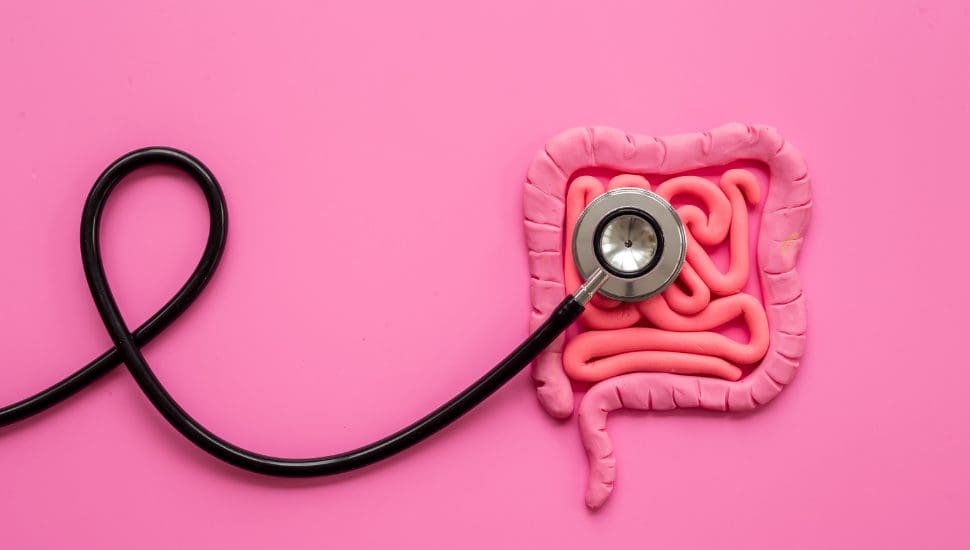
Colorectal cancer screenings can involve blood tests, stool tests, or a colonoscopy. In this last case, while the patient is under light sedation, a flexible tube is inserted into the rectum to photograph the entire length of the colon.
“Some people have apprehension about doing colorectal cancer screenings — particularly colonoscopies — but the good news is we have a lot of different screening modalities we can use,” Afari explains. “We can do the less invasive fecal immunochemical test, or FIT test, to allow us to figure out whether there is a need to do something a little bit more invasive.”
Afari recommends patients discuss their risk factors with their primary care team to see what option is right for them, but also advises that sometimes, the discomfort of a colonoscopy — which involves fasting and using laxatives to empty out the bowels — is often worth it.
“Colonoscopy usually stands out as the gold standard because there’s actual visualization of the colon,” he says. “The FIT test just gives us a hint of something disrupting the body. If you’re able to tolerate a colonoscopy, and then your doctor sees nothing wrong, follow-up is not for another 10 years.”
Understand Risk
Genetics and family history play a big role in determining a person’s risk of developing colorectal cancer, but the biggest factor is something much more universal: age. “As ones gets older, colorectal tissue starts changing and shifting, so that’s why we recommend people get their first screening when they turn 50,” says Afari.
That being said, young people are not immune, with rates of colorectal cancer having been on the rise in people under 50 — especially in those who have a parent, sibling, or child with a history of the disease. According to the American Cancer Society, one in five people who have colorectal cancer is under 55.
Change Habits
Behaviors like smoking, alcohol use, lack of exercise, and eating lots of red meat and processed food can increase one’s risk of developing colorectal cancer. Obesity and diabetes are also linked to higher incidence. So, lifestyle interventions like exercise and adopting a healthy diet can help decrease risk.
“Fiber intake is important, as it helps keep the colon healthy and intact,” Afari says. “If you smoke and you quit, it gives you an exponential benefit of reducing the chance of colon cancer down the road.”
The Bottom Line
Because of the lifesaving power of early screening, even the most health-conscious person is advised to keep colon health in mind when meeting with their health care providers.
“Getting screened is so important,” says Afari. “If you notice any changes in your body, come in, talk to your provider, and listen to their recommendations. That will help you avoid this very avoidable cancer from spreading throughout your body and causing something much more devastating.”
To learn more about colorectal cancer screening options (including colonoscopy referrals and at-home Cologuard testing), please speak with your DAP Health primary care clinician or click here.
If you are not yet a DAP Health primary care patient and would like to become one, please click the “Become a Patient” button at the top of the page to get started.